

Understanding how to become a visual merchandiser means stepping into a profession that combines creativity, strategy and in-depth knowledge of the retail environment. Anyone looking for information about this role usually wants to know what a visual merchandiser does, which skills they need to develop, whether there are any visual merchandising courses that are truly worthwhile, and what differences exist between roles such as window dresser and visual manager.
In this guide, you will find a clear and practical path to understanding the meaning of merchandiser in the retail sector, where to start, and how to approach this career with greater awareness.
TABLE OF CONTENTS:
- A role that goes beyond the shop window
- The meaning of “merchandiser” and the purpose of the role
- What a visual merchandiser actually does in practice
- The skills that really matter
- Which educational path to choose
- Are visual merchandising courses really useful?
- Hands-on experience is key
- Your portfolio: your real calling card
- Where a visual merchandiser can work
- How to become a visual merchandiser, at a glance
- Conclusion
- FAQ
A Role That Goes Beyond the Shop Window
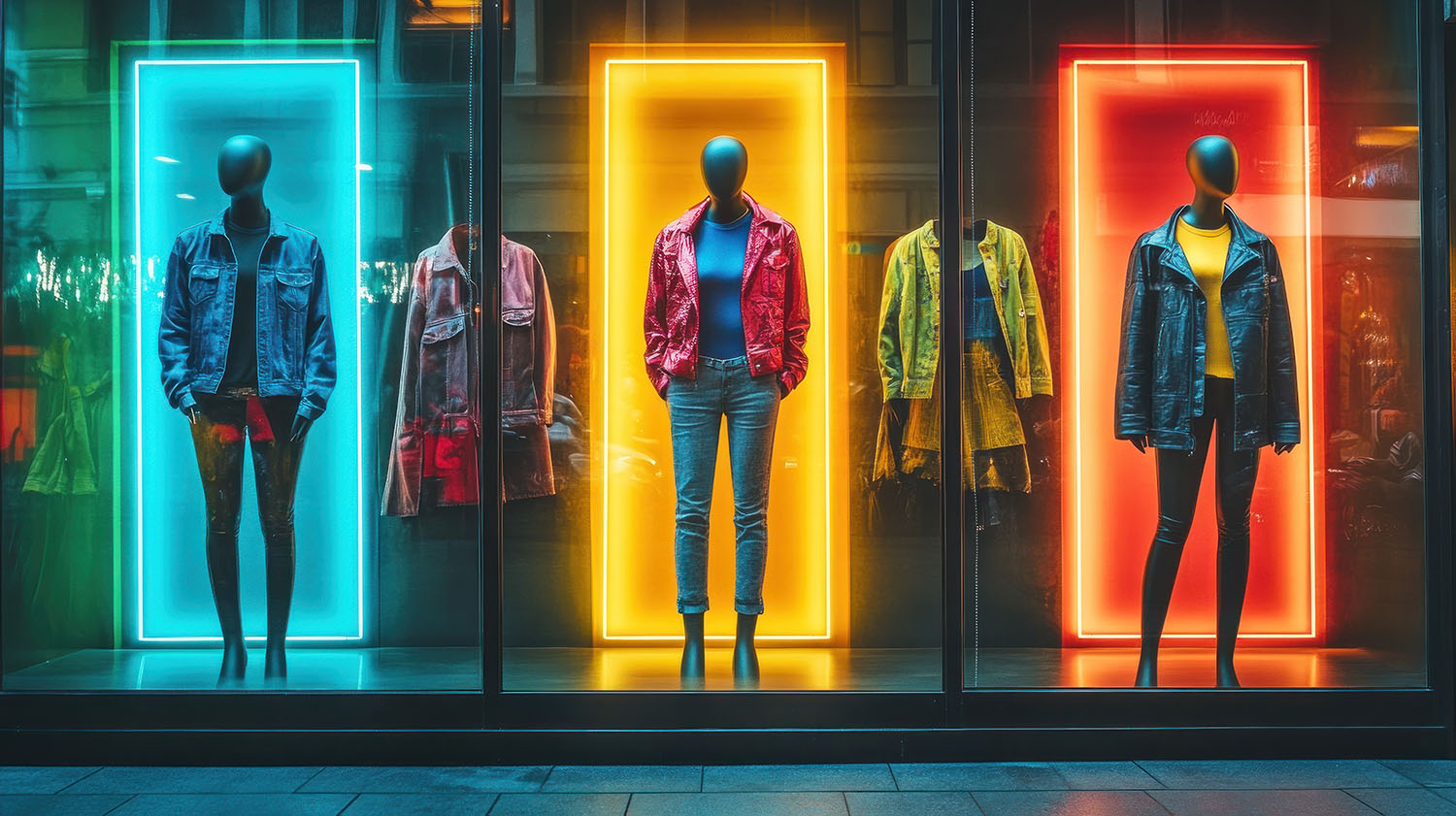
Many people associate this profession solely with the image of the shop window. In reality, visual merchandising is much more than that. The shop window is certainly one of the most powerful tools for attracting attention and conveying identity, but the work of a visual merchandiser involves the customer’s entire experience inside the retail space.
Every store communicates something through the way products are arranged, the colours, the lighting, the display materials, the customer journey and the focal points. Nothing should be left to chance. A tidy, consistent and well-designed environment is not only more pleasing to look at, but also more effective in guiding the customer, enhancing the product and strengthening the brand perception.
This is why the visual merchandiser has become a key figure in contemporary retail. Today, stores do not just sell products, but also atmosphere, positioning, recognisability and desirability. And all of this also depends on the way the space is designed.
The Meaning of “Merchandiser” and the Purpose of the Role
To fully understand this profession, it is helpful to start with the meaning of merchandiser. Merchandising, in a broad sense, includes all the activities that help present and enhance a product within a sales environment. When we talk about visual merchandising, the focus is specifically on the visual side of that enhancement.
A visual merchandiser therefore works to make the product clearer, more visible and more desirable. They do not simply display items in an orderly way, but create a visual narrative that is consistent with the brand identity and the commercial goals of the retail space.
This means that the role has a dual nature. On one side there is the aesthetic component: balance, colours, shapes, materials, displays and visual impact. On the other there is the strategic component: understanding what to highlight, where to place it, when to do it and according to which logic. A skilled visual merchandising professional does not design a space just because it “works visually”, but because that solution genuinely helps the brand communicate more effectively and the product sell better.
What a Visual Merchandiser Actually Does in Practice
When people ask what a visual merchandiser does, the most useful answer is this: they design the way a product is presented within a retail space.
In practical terms, this role may involve:
- organising the layout of a store
- defining the focal points of a display
- designing seasonal or themed shop windows
- highlighting the launch of a new collection
- managing promotional corners
- studying the customer journey within the store
- coordinating display materials, graphic supports and in-store communication tools
- maintaining visual consistency across multiple stores or across different areas of the same store
A visual merchandiser looks at the space as a system. They know that the position of a product, the distance between elements, the lighting, the colour of a background or the type of display support can significantly affect the customer’s perception.
In a fashion store, for example, they may decide how to build a display that brings out a new collection. In a perfumery, they may organise a corner that guides the customer towards a premium line. In a design store, they may work to create a sense of order, quality and consistency between the product and the environment. In every case, the principle remains the same: to make visual communication more effective.
The Skills That Really Matter
To become a visual merchandiser, having a good eye for aesthetics is not enough. It requires a broader set of skills that combines creative sensitivity with practical ability.
The first essential skill is, of course, visual awareness. You need to be able to observe and interpret spaces. Colours, proportions, materials, lighting, solids and empty areas are not just decorative elements: they are communication tools.
The next key skill is planning ability. A visual merchandiser must know how to create a display with a clear logic behind it. They need to understand what to highlight, how to organise the flow, how to create focal points and how to avoid visual confusion.
Another fundamental skill is an understanding of buying behaviour. A space should not be designed solely on the basis of personal taste. It is important to think about how customers move, where their eyes go, what catches their attention and which elements can help them navigate the space more easily.
The ability to interpret the brand also matters a great deal. Every brand has its own specific identity. A premium store requires a different visual language from that of a young, dynamic or promotion-driven store. A visual merchandiser must be able to translate that personality into the space.
Finally, organisation, precision and the ability to work as part of a team are essential. This role often involves working closely with store managers, marketing teams, retail managers, suppliers, installers and operational staff. Having ideas is not enough: you also need to know how to bring them to life, on time, in the right way and with the right tools.
Which Educational Path to Choose
There is no single mandatory path to enter this profession. However, some areas of study provide a particularly strong foundation.
Anyone who wants to become a visual merchandiser may come from fields such as fashion design, interior design, retail design, set design, visual communication or marketing. All of these paths, when approached in the right way, help develop sensitivity to image, space and the relationship between product and context.
That said, theory alone is not enough. In this profession, it is essential to learn how to turn ideas into real solutions. This is why courses that include practical exercises, concrete projects, layout studies, display simulations and reflection on customer behaviour tend to be more valuable.
Even those with a different background can still build a credible path into the profession, provided they deepen their knowledge in a focused way and develop a consistent portfolio. The value of a candidate does not depend only on their educational qualifications, but on their ability to show that they know how to read a space and design an effective display.
Are Visual Merchandising Courses Really Useful?
Yes, in many cases visual merchandising courses can be very useful, especially when they help fill a practical gap or allow for more focused specialisation.
Not everyone comes from a design school or an academic background already aligned with visual merchandising. A well-structured course can provide method, professional vocabulary, observational tools and opportunities to work on real case studies.
The most valuable courses are those that help develop three key areas. The first is the ability to observe spaces critically. The second is the ability to design with a clear logic. The third is the ability to present your ideas, in other words to explain why a solution works and how it connects to the brand’s goals.
Anyone looking for visual merchandising courses should therefore assess the programme carefully, paying attention to its practical approach, the quality of the teachers and the presence of real exercises. It is not enough for a course to simply “talk about” visual merchandising: it must help build usable skills and produce materials that are genuinely useful for a portfolio.
Hands-On Experience Is Key
As important as education may be, this is one of those professions that can only truly be understood by working in real retail spaces.
Looking at a store through a professional lens means training yourself to notice things that customers often miss: the point where attention drops, the strongest area of the display, the relationship between light and product, the role of supporting materials, and the way the perception of an item changes depending on its context.
Many professionals begin in exactly this way: by gaining experience in-store, collaborating with those responsible for displays, supporting merchandising activities or closely observing the day-to-day workings of the retail space. Even roles that may seem more operational can become valuable training grounds when approached with care and an analytical mindset.
Experience also helps reveal an important truth: visual merchandising is not about random intuition, but about choices that need to work in practice. A good idea, if it is not clear, feasible or consistent with the brand, remains nothing more than an aesthetic exercise.
Your Portfolio: Your Real Calling Card
If you want to work in this field, your portfolio is one of the most important tools you can have. In a visual profession, showing how you think is essential.
A strong portfolio does not necessarily have to include only real projects for major brands. It can also feature study projects, simulations, shop window restyling, corner concepts, layout analyses, moodboards, product launch proposals, display ideas, and reflections on materials and customer flow.
What really matters is making your method stand out. Anyone reviewing a visual merchandiser profile wants to understand whether you know how to observe, synthesise, create order, enhance a product and build a consistent visual identity. That is exactly what a portfolio is for: making your way of thinking visible.
Where a Visual Merchandiser Can Work
A visual merchandiser can find opportunities in many different sectors. Fashion and luxury are the most immediate ones to imagine, but they are far from the only ones. Beauty, furniture, jewellery, sports, food retail, large-scale retail, concept stores, showrooms and events are all areas where the visual experience has a direct impact on the perceived value of the product.
In some cases, the role is carried out within a brand or a retail chain. In others, professionals work with agencies, creative studios or companies that develop materials and solutions for the point of sale.
This is also where the connection with Seven Group becomes particularly relevant. The work of a visual merchandiser is not based on ideas alone: it needs concrete tools to take shape inside the retail space. From window displays to packaging, from display units to communication materials, every element helps build a visual experience that is consistent and recognisable.
In this sense, anyone involved in product presentation and enhancement often works alongside companies such as Seven Group, which specialise in developing tailored retail solutions and turning a concept into a physical project that reflects both the brand identity and the needs of the display space.
How to Become a Visual Merchandiser, at a Glance
At this point, the answer becomes clearer. Becoming a visual merchandiser does not simply mean loving fashion or having good taste. It means developing a professional eye, learning how to read a retail space, understanding customer behaviour, knowing the logic of the brand and building the ability to design a space with a precise goal in mind.
The most solid path is made up of several elements that reinforce one another: a coherent educational foundation, any relevant specialist courses, hands-on experience, constant observation and a well-structured portfolio. You do not necessarily need a perfect path on paper. What you need, rather, is concrete and credible growth.
Anyone with visual sensitivity, method, curiosity and discipline can find this profession to be a stimulating career path. Because visual merchandising is one of the places where creativity and results truly come together. And when it works, the customer notices immediately, even without realising it.
Conclusion
Becoming a visual merchandiser means learning how to use space as a tool for communication and sales. It means fully understanding what a visual merchandiser does, distinguishing this role from that of a window dresser, understanding how the career can develop into that of a visual manager, and carefully choosing the right educational path or visual merchandising courses to turn passion into real expertise.
It is a profession that requires creativity, but also logic. A trained eye, but also method. Vision, but also practicality. And that is exactly why it connects so directly with everything that helps enhance a product at the point of sale: window displays, product presentation, packaging and visual communication.
This is an area in which companies like Seven Group can become key partners in giving shape, substance and consistency to a truly effective retail project.
FAQ
A visual merchandiser plans the visual presentation of products inside a retail space. They are responsible for layouts, shop windows, displays, customer flow and visual materials designed to enhance the product and make the shopping experience more effective.
A window dresser mainly focuses on the shop window and the store’s external visual impact. A visual merchandiser, on the other hand, has a broader perspective and is responsible for the overall visual organisation of the retail space.
Not always, but visual merchandising courses can be very useful for developing a solid method, practical tools and more targeted skills, especially when they include hands-on exercises and real case studies.
Courses related to fashion design, interior design, retail design, set design, visual communication and marketing are particularly valuable. The ability to build a strong and consistent portfolio also plays a major role.
Yes. With experience, stronger strategic skills and the ability to coordinate people and projects, a visual merchandiser can progress into more senior roles such as visual manager.
Related articles

Counter Displays: Materials, Formats and Solutions for the Point of Sale
Guide to counter displays for products and points of sale: materials, formats,…

Window Display Design: From Concept to Custom Production
How a custom window display is created: concept, design, materials, production…

Prototyping in packaging and displays: why test before producing.
Discover the importance of prototyping in packaging and displays. Mock-ups,…